
We will be closed on 25th and 26th of November in observance of Thanksgiving
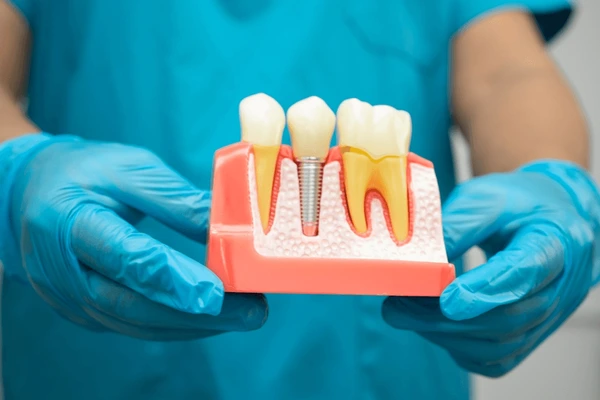
What Are Dental Crowns and When Do You Need One? A Leesburg, VA Dentist Explains
Introduction
A small chip from the edge of a front tooth is different from a fracture through a chewing cusp on a molar.
Decay near the center of a tooth creates a different structural picture from damage extending toward the gumline.
A crack running through a heavily restored area raises different questions from a superficial enamel defect.
Patients naturally judge damage by what they can see.
- “How big is the broken piece?”
- “How large is the cavity?”
- “How much tooth did I lose?”
Those questions matter, but they do not tell the whole story.
For patients researching dental crowns in Leesburg, VA, the location of damage can be just as important as its visible size.
Dentists consider which part of the tooth is affected, how much healthy structure remains, whether the tooth carries significant chewing forces, and whether the damage changes the tooth’s ability to support a smaller restoration.
Therefore, this guide takes a closer look at dental crowns and helps you understand more about common situations in which crowns may be recommended. Let’s get started.
Why Does the Location of Tooth Damage Matter?
Imagine two cracks of five millimeters long.
One sits on a noncritical surface area, while the other crosses a part of the tooth that repeatedly bears chewing forces.
The measurement is the same, but the restorative problem may not be. This is why dentists do not evaluate tooth damage with a ruler alone.
A small-looking fracture in a heavily restored molar may create a different situation from a similar chip in a tooth with substantial healthy structure.
How Does Dental Crown Treatment Work?
Assessment and Diagnosis
The dentist will first assess the tooth, the surrounding tissues, the symptoms, the existing restorations, and the patient’s bite. When necessary, we recommend dental X-rays to assess what you cannot see. The aim is to assess the extent of damage and select the most suitable treatment method.
Restoration Assessment
Before recommending a crown, the dentist will first determine if the tooth can be predictably restored . The evaluation may include:
- Remaining tooth structure
- Amount of rot
- Location and severity of fracture
- Involvement of the Gumline
- Status of pulp
- Support of tissue health
A tooth with an acceptable long-term prognosis for restoration should not be crowned.
Preparation of tooth
If a crown is needed, the tooth is carefully prepared to allow enough space for the restoration. Decayed or failing restorative material can also be removed. The amount and design of the preparation will depend on the individual clinical situation.
Impression or Digital Print
The custom crown is fabricated by taking an accurate record of the prepared tooth and the adjacent structures. Depending on the dental practice, this may include conventional impression materials and a digital intraoral scan.
Customizing the Crown
The crown is fabricated according to the treatment plan. Some of the factors considered during fabrication are:
- Shape Silhouette
- Contact with adjacent teeth
- Anatomy of the Chewing Surface
- Shade.
- Bite-relationship
End Placement
Before the crown is permanently cemented, the dentist evaluates a number of factors to ensure a successful outcome, including:
- Fit
- Contact with neighboring teeth
- Bite
- See also
- General comfort
Any necessary adjustments are made before the crown is cemented into place to help ensure it fits comfortably and blends well with the neighboring teeth.
At A Glance
| Who Qualifies? | Dental crowns are a great option for individuals with weak or structurally damaged teeth. A crown helps strengthen the existing structure. |
| Process Overview | Step 1
The procedure begins with an initial consultation with your dentist for porcelain crowns in Leesburg, VA. Step 2 Once you qualify for treatment, the dentist will recommend the type of crown that best fits your smile. Step 3 Finally, after customization, it’s time to place the crowns on your smile and learn to eat and live with them. |
| Timeline | The timeline for a dental crown can range from a few weeks to a few months. |
| Aftercare | Follow dietary restrictions and recommendations by your dentist to ensure longevity of the crowns. |
| Location & Contact | The Dental Co. of Leesburg
17 Fort Evans Rd NE Ste C, Leesburg, VA 20176, United States |
Benefits of Dental Crowns
Provide More Coverage When a Small Repair Isn’t Enough
For many dental problems, a localized filling is a good idea. When the damage has significantly altered the tooth or compromised important structural areas, a crown can provide more extensive restoration around the prepared tooth.
Restores a Weakened or Lost Tooth
A fracture can remove a portion of a cusp, edge, wall, or chewing surface. If the tooth is still restorable, a custom crown can restore the external form.
Replace Functional Chewing Surfaces
The back teeth have surfaces that must be shaped carefully for chewing. The crown design can reproduce lost contours and can be adjusted to the opposing occlusion.
Solve Both Visible and Structural Problems Together
Sometimes, the filling is larger, and the tooth may be discolored, fractured, or uneven. In suitable cases, tooth-colored crown materials may serve both needs.
Help Save a Saveable Tooth
There’s a lot of damage, but that doesn’t mean it’s extraction. If a tooth has a reasonable outlook for restoration, a crown can be part of a plan to save it.
Choosing Permitting Material According to the Case
Different crown materials have distinct characteristics. In treatment planning, the dentist may consider tooth location, bite forces, appearance, remaining structure, and other clinical factors.
Planning Crown Treatment With a Leesburg Dentist
Patients often describe damage by size.
- “It is only a small chip.”
- “The cavity does not look that big.”
- “Just one corner broke.”
Those descriptions are useful, but they do not reveal everything happening within the tooth.
When a professional examines Leesburg dentist crowns, the discussion may include the location of decay or fracture, remaining tooth structure, existing fillings, possible cracks, bite forces, symptoms, and whether the tooth can be predictably restored.
One small-looking defect may be suitable for a limited repair while another may involve a major cusp. A third may extend toward the gumline, creating a more complex restorative problem.
This is why the treatment decision should follow evaluation rather than visible size alone.
For patients considering restorative dental care, the goal is not to choose the most extensive treatment just because damage exists. It is to match the restoration to the tooth’s actual condition.
FAQs
- When is a tooth in need of a dental crown?
If there is extensive decay, fracture, a large failing filling, significant wear, selected cracks, or if previous treatment has left a tooth that needs broader restoration, a crown may be recommended. The choice depends on the location of the damage, the remaining structure, bite forces, and restorability.
- How long do dental crowns last in Leesburg, VA?
Most dental crowns can last 10 to 15 years or more, but individual outcomes can vary. Longevity can be influenced by oral hygiene, crown material, risk of decay, grinding, bite forces, trauma, and the condition of the underlying tooth.
- Does it hurt to get a dental crown?
The usual practice is to administer local anesthetic to patients during tooth preparation to keep them comfortable. You may have some temporary sensitivity or tenderness of the gums. If the discomfort continues, is severe, or gets worse, call the dental office.
- What is the cost of a dental crown in Leesburg, VA?
The price will vary depending on the material used for the crown, the location of the tooth, the difficulty of your case, the dentist’s office, and whether you need any other treatment. Insurance benefits are also different. A dental examination is required to estimate the condition of each individual tooth.
- What is the difference between a crown and a filling?
A filling is used to correct one part of a tooth. The exposed part of a prepared tooth is covered by a crown, providing a wider restoration. The choice depends on the location, the extent of damage, the remaining structure, and the functional requirements.
Conclusion
Two broken teeth can lose pieces of similar size, but that does not make them the same restorative problem.
One fracture may involve an edge while another may pass through a chewing cusp. Decay that looks minor from the front may extend between teeth. Damage near the gumline may create challenges that are not obvious in the mirror.
For patients considering tooth restoration in Leesburg, VA, treatment decisions should not be based solely on how large a defect appears.
Location matters, the bite matters, and sometimes a filling is appropriate.
For those researching dental crowns, a clinical examination at the Dental Co. of Leesburg can help determine which situation applies.